ChatGPT Training NZ, home
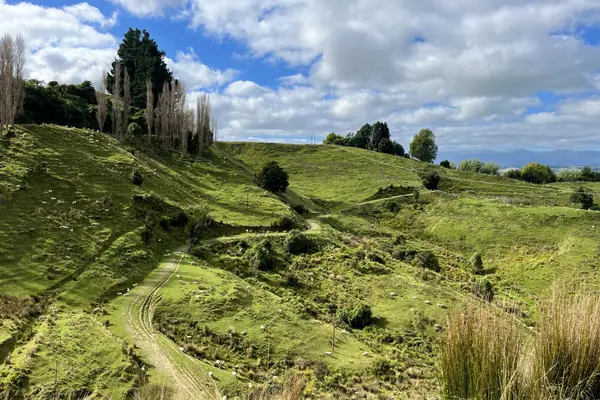
Screen-print illustration of the broad Manawatū River plain beneath the Ruahine ranges, Manawatū-Whanganui
Illustration generated with AI.

Manawatū-Whanganui. 7 districts and cities

ChatGPT training in Manawatū-Whanganui

Manawatū-Whanganui has food plants, distribution links and education services spread across several centres. ChatGPT can support everyday planning when staff supply safe examples and verify the resulting message.2,5,18,19

Out of every 100 working people in Manawatū-Whanganui, 58 are in office, management or sales roles.

Office, management, sales
58
People-facing
11
Hands-on
30

New Zealand: 64 in office, management or sales roles, 9 people-facing, 27 hands-on, out of every 100.

Office, management and sales: managers, professionals, admin and sales staff. Source: Stats NZ 2023 Census; ILO research on AI and jobs, 2025. A guide, not a prediction.
Residents
251,0002023 Census
Business locations
27,486Feb 2025, +5.2% since 2020
Employees (jobs here)
108,849at local businesses, Feb 2025
Towns with a page
171,000+ residents
Council areas
7districts and cities

What AI means for work in Manawatū-Whanganui

Manawatū-Whanganui ranks 12 of 16 regions for the share of desk-based roles. Findings from Stats NZ data, and what each means for ChatGPT training.

On-site or over video? How Manawatū-Whanganui works

Both on-site and remote sessions work. Most teams start with a half-day on-site.

16 out of 100

Mainly worked from home, census day 2023

New Zealand 17.7%

87 out of 100

Households with internet access

New Zealand 90.5%
Main means of travel to work on census day, and access to the internet in occupied private dwellings.

Source: Stats NZ, 2023 Census, usually resident employed people.

What people in Manawatū-Whanganui do for work

58.5% of employed residents in Manawatū-Whanganui work in desk-based roles, against 63.6% across New Zealand. Most people here work with their hands, so ChatGPT helps most with the jobs around the job: quotes, replies to customers, rosters and the paperwork owners do at night.

Employed residents by occupation group, Manawatū-Whanganui and New Zealand, 2023 Census
Per 100 workersChartManawatū-WhanganuiNZ
Managers 18 18
Professionals 23 27
Technicians and trades workers 13 13
Community and personal service workers 11 9
Clerical and administrative workers 11 11
Sales workers 8 8
Machinery operators and drivers 7 6
Labourers 11 9

Office, management and sales means four occupation groups: managers, professionals, admin and clerical staff, and sales. These are roles where AI assistance is most applicable. This broad proxy does not measure adoption or predict job change. People-facing means carers, hospitality and service staff. Hands-on means trades, drivers, machine operators and labourers.

Source: Stats NZ, 2023 Census, usually resident employed people; ILO, Generative AI and jobs: a refined global index of occupational exposure (2025).

Manawatū-Whanganui has 1.6× New Zealand’s share of farming, forestry, fishing jobs

Out of every 100 jobs in Manawatū-Whanganui, 14 are in health and social care (12 nationally). Farming, forestry, fishing is the local speciality. We shape examples around the work that is actually here.

Share of paid jobs by industry, Manawatū-Whanganui and New Zealand, February 2025
IndustryChartManawatū-WhanganuiNZ
Health and social care 14.0% 12.0%
Manufacturing 10.7% 9.4%
Education 10.6% 8.5%
Public administration 9.5% 6.4%
Retail 9.2% 9.3%
Construction 8.0% 8.2%

Share of paid employees at business locations in the area, by ANZSIC06 industry division. × is the local share divided by the national share.

Source: Stats NZ, Business Demography Statistics, February 2020 and 2025.

More businesses in Manawatū-Whanganui than five years ago: 26,121 then, 27,486 now

Growth of 5.2% in five years, against 9.6% growth nationally. Health and social care added the most jobs (+1,229). Farming, forestry, fishing lost the most (−732). New businesses are often setting up their systems from scratch, which is a good moment to build AI into them.

Business locations
26,12127,486 in 2025, from 2020
+5.2% NZ +9.6%
Employees (jobs here)
108,456108,849 in 2025, from 2020
+0.4% NZ +5.0%
Change in employees by industry in Manawatū-Whanganui, February 2020 to February 2025
IndustryChart20202025Change
Health and social care 13,95615,185+1,229
Other services 3,8144,258+444
Construction 8,2648,701+437
Farming, forestry, fishing 9,0308,298−732
Admin and support services 3,2542,683−571
Public administration 10,79910,328−471

Geographic units (business locations) and paid employees, February of each year. Small counts are randomly rounded by Stats NZ, so small changes can be noise.

Source: Stats NZ, Business Demography Statistics, February 2020 and 2025.

Council areas in Manawatū-Whanganui, compared

Share of employed residents in desk-based roles, by district

Desk-based share by district, Manawatū-Whanganui
District or cityChartShareNZ
Palmerston North City 61.0% 63.6%
Manawatu District 60.5% 63.6%
Whanganui District 57.0% 63.6%
Tararua District 56.6% 63.6%
Horowhenua District 55.7% 63.6%
Rangitikei District 55.1% 63.6%
Ruapehu District 54.4% 63.6%

Office, management and sales means four occupation groups: managers, professionals, admin and clerical staff, and sales. These are roles where AI assistance is most applicable. This broad proxy does not measure adoption or predict job change.

Source: Stats NZ, 2023 Census, usually resident employed people.

Also partly in Manawatū-Whanganui: Taupo District, Stratford District, Waitomo District.

Towns and cities in Manawatū-Whanganui

Each has its own page and local brief. Largest first, by residents at the 2023 Census.

Towns in Manawatū-Whanganui
TownResidentsDesk-based Chart Business locationsSince 2020
Palmerston North 78,000 60.6% 7,458 +4.1%
Whanganui 41,500 55.8% 3,672 +14.6%
Levin 19,500 51.5% 1,290 +6.4%
Feilding 16,900 56.5% 1,452 +15.5%
Marton 5,600 48.4% 405 +8.9%
Dannevirke 5,580 44.8% 459 −1.9%
Taumarunui 4,820 52.2% 384 −0.8%
Foxton 3,380 52.2% 222 +27.6%
Ashhurst 3,240 57.2% 171 +16.3%
Pahiatua 2,840 52.6% 276 +1.1%
Foxton Beach 2,130 56.2% 132 +25.7%
Bulls 2,060 51.4% 141 −9.6%
Taihape 1,670 49.5% 216 −6.5%
Woodville 1,660 48.1% 99 +3.1%
Shannon 1,550 52.2% 72 +26.3%
Ōhakune 1,280 55.4% 219 +1.4%
Raetihi 1,120 47.7% 105 +16.7%
New Zealand4,993,92363.6%654,435+9.6%

ChatGPT for Manawatū-Whanganui’s largest industries

A fictional delivery table or product test log can reveal incomplete entries before a handover. The exercise should end with clear questions for the person who owns the record. Treat the out-of-every-100 chart as a starting point for a regional task, not a count of existing users.5,18

Distribution and logistics

Analyse a sample route exception table for missing fields, then write a short update for the next coordinator.5,20

Food production

Draft a shift checklist from approved processing notes, with the plant supervisor confirming each step.18,19

About Manawatū-Whanganui

Manawatū-Whanganui is a broad central and lower North Island region served by Horizons Regional Council, whose area includes seven principal district and city councils. Food production and processing sit alongside manufacturing, freight and logistics, education, defence, and research; the mix is visible in AFFCO’s Feilding beef plant, Open Country Dairy’s Whanganui powder plant, and the Manawatū research and tertiary cluster. CEDA’s September 2025 dashboard reports distribution and logistics as 12.8% of GDP in its Manawatū snapshot for the year to March 2024; that snapshot covers a narrower area than the full Horizons region. Te Utanganui is a major intermodal freight programme connecting road, rail, air and sea, while regional universities and research facilities support food and business innovation.2,5,7,12,13,18,19

ChatGPT ideas grounded in Manawatū-Whanganui

Agriculture and food production

  • Compare food process trial spreadsheets

    Food innovation staff could use file analysis to compare trial workbooks, check units and surface changes that merit a closer look. They would verify calculations against the original data before using the findings in a product decision.7

    Why here: Massey FoodPilot works with food and beverage product development on the Manawatū campus, where trial data is a relevant example for a workshop.

    • ChatGPT Business
    • file and data analysis
  • Create a dairy quality guidance GPT

    A dairy business could build a custom GPT around approved internal quality procedures so staff can find the right document section and prepare draft checklists. The owner would review the content and access controls before colleagues use it.19

    Why here: Open Country’s Whanganui site specialises in heat-stable whole milk powders, making controlled quality documentation a locally grounded example.

    • ChatGPT Business
    • custom GPTs
  • Research regional ingredient and market questions

    A food business could use deep research to assemble a sourced briefing on an ingredient, market or regulation question, then save the working material in a Project. Staff would check dates and primary sources before relying on the briefing.7,18

    Why here: The region has both food processing sites and Massey FoodPilot’s product development facility, so research tasks can connect production questions to innovation work.

    • deep research
    • Projects

Distribution and logistics

  • Analyse freight movement data for planning

    A transport analyst could use data analysis on a de-identified freight dataset to compare routes, volumes and timing assumptions. They would document data limits and have an operations specialist validate any pattern before using it.5

    Why here: Te Utanganui is explicitly designed around road, rail, air and sea links, making intermodal planning data a specific regional use case.

    • ChatGPT Enterprise
    • file and data analysis
  • Build a freight project reference GPT

    A delivery team could configure a custom GPT with approved public project material to answer routine questions and point users to relevant source documents. Project staff would keep the reference set current and check answers before external use.5

    Why here: The Te Utanganui programme describes several business zones and three transport catalysts, giving project participants a real set of connected public documents to organise.

    • custom GPTs
    • ChatGPT Business
  • Prepare a regional freight options brief

    A planning team could use deep research to gather public material on freight network changes and produce a cited options brief for internal discussion. Analysts would inspect every source and separate confirmed work from proposals.20

    Why here: The council project statement distinguishes Te Utanganui’s freight hub, road projects and airport plan, so the brief can track the region’s separate components accurately.

    • deep research
    • Projects

In the local business news

  • Award-winning UV technology approved for Regional Infrastructure Fund Kānoa, Regional Economic Development & Investment Unit

    Manawatū-based NovoLabs received in-principle RIF support for scaling manufacture of its UV disinfection technology. The article links the investment to food production, dairy farming and advanced manufacturing in the region.

  • RIF loan supports new freight hub Kānoa, Regional Economic Development & Investment Unit

    A staged loan will support the rail component of Te Utanganui’s Bunnythorpe Regional Freight Hub. The article describes planned links to road, rail, air and sea and identifies logistics and manufacturing as potential areas of later activity.

Local business networks

  • Manawatū Business Chamber11Supports integrated business growth through advocacy, networking and capability building in Manawatū.
  • Whanganui Chamber of Commerce17Offers Whanganui businesses networking events, business support and advice.
  • Central Economic Development Agency (CEDA)8Provides business growth advice, Māori business support, mentoring, innovation and export support across Manawatū-Whanganui.
  • Rangitāne Investments Limited4Rangitāne identifies this company as owning Crown leaseback properties for commercial return; the iwi’s wider investments also include local commercial property and agribusiness vehicles.

A regional session can use a small safe dataset from one workflow and practise turning its findings into a checked handover.5,18

Public ChatGPT workshops in Manawatū-Whanganui

No public ChatGPT days are booked in Manawatū-Whanganui right now. If you are a sole trader or a small team, register interest and we will let you know when one is planned. Want your whole team trained? Enquire any time.

Register interest in a public workshop in Manawatū-Whanganui

Tell me when there is a workshop in Manawatū-Whanganui

We will email you when a public workshop is scheduled nearby. No other mailing.

We use these details only to reply to you, and store them securely with TheColab. Privacy

Other regions

ChatGPT training in Manawatū-Whanganui: questions

Would a freight table need real customer names?

No. A fictional table can preserve the fields and exceptions that matter for the exercise.5

Can a food plant rehearse a shift message?

Yes; a sample process note can support a draft that the responsible supervisor checks.18,19

Where do regional examples come from?

Sources identify freight, research and food work across the region, so choose the participant’s own setting.5,7,18,19

Train your team in Manawatū-Whanganui

  1. Send us a few linesHow many people, where you are, and the jobs that eat your week.
  2. We reply with a planA suggested session and format, plus what to bring: real quotes, emails and questions.
  3. Your team does the workAt your place or over video. They finish with ChatGPT doing real tasks, not demos.
  • In person
  • Remote
  • Half-day workshop
  • Full-day workshop
  • Team rollout

Independent training by TheColab. Not affiliated with OpenAI.

Enquire

Tell us about your team in Manawatū-Whanganui. We reply by email with a suggested course and format.

We use these details only to reply to you, and store them securely with TheColab. Privacy

Sources

Local research checked 29 September 2026. Population and business figures come from Stats NZ.